
Botox Danger Zones Risks and Injection Safety OGOmed Expert Guide
Botox may look like a simple cosmetic treatment: a few small injections, a short appointment, and little or no downtime. But the face is packed with small muscles, nerves, blood vessels, and structures that sit surprisingly close together. That is why botox danger zones matter. A difference of only a small distance in placement can affect which muscle receives the strongest effect and, in some cases, change normal facial function.
Botox is a form of botulinum toxin that temporarily reduces nerve signals to selected muscles. When treatment is carefully planned, this temporary reduction in muscle movement can soften wrinkles while keeping the face expressive. The challenge is that the medication does not understand cosmetic goals, it works wherever it reaches, which makes accurate assessment and controlled placement essential.
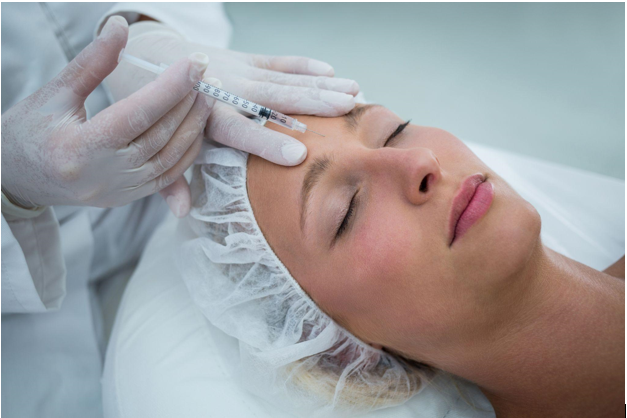
Why Facial Anatomy Matters for Botox Treatment
A provider who understands facial anatomy is not simply memorizing injection points. Faces differ in muscle size, eyebrow position, bone structure, previous treatments, and the way individual muscles work together during facial expressions. A person’s unique facial structure therefore matters just as much as textbook diagrams.
Before deciding where to inject Botox, a trained medical professional evaluates the resting face as well as movement. This helps identify the targeted muscles, stronger areas, existing facial asymmetry, and muscles that should remain largely untouched. A good assessment may include:
- eyebrow and eyelid position;
- strength and direction of the facial muscles;
- previous dermal fillers;
- existing weakness or asymmetry;
- relevant medical history and medications.
This planning becomes particularly important near the eyes, mouth, nose, and neck. These areas contain relatively delicate muscles, and weakening the wrong muscle may affect much more than the appearance of a wrinkle.
Frontalis Muscle and Brow Position
The frontalis muscle lifts the eyebrows and creates horizontal forehead lines. Reducing its activity can soften these lines, but the muscle also helps support eyebrow position. If its activity is weakened more than intended, the brow may descend and produce a heavy or tired appearance.
Too much Botox is not necessarily better Botox. A provider has to consider how much the frontalis is already compensating for natural eyelid or brow position. Excessive weakening can contribute to brow ptosis, especially in someone who relies on forehead activity to keep the brows elevated. Reviews of upper-face injections identify eyebrow and eyelid drooping among the important technique-related complications of botulinum toxin treatment.
Cosmetic Treatments Around the Eyes
The area around the eyes is one of the clearest examples of why proper injection technique matters. The orbicularis oculi muscle surrounds the eye and plays a major role in blinking and eyelid closure. Nearby structures perform completely different jobs. The levator palpebrae superioris muscle, for example, helps lift the upper eyelid. If toxin reaches this muscle unintentionally, a person may experience drooping eyelids. The result is usually temporary, but eyelid ptosis can remain noticeable until the drug effect gradually fades.
Potential problems around the eye can include:
- eyelid or eyebrow drooping;
- uneven eyebrow position;
- altered eyelid movement;
- dry or irritated eyes;
- double vision in rare cases.
Diplopia has been reported after unintended effects on muscles controlling eye movement, although it is considered an uncommon complication. Treatment close to muscles that control eyelid movement or eye position requires particularly precise techniques rather than a standard pattern used on every face.
Nose and Midface Botox Injection Risks
The nose contains small muscles and an important vascular network in a very compact area. The nasalis muscle contributes to movements around the nose and may sometimes be treated for dynamic lines. Nearby structures include vessels such as the dorsal nasal artery, which supplies blood to tissues in the region.
Botox and dermal filler should not be treated as interchangeable procedures here. Botox primarily changes muscle activity, while fillers physically add volume, meaning their risk profiles are different. Still, knowledge of vascular and muscular facial anatomy matters for both types of cosmetic procedures.
For Botox treatment around the nose, experienced Botox injectors think about muscle direction, neighboring structures, injection depth, and how much unwanted spread could influence nearby muscles. The goal is controlled relaxation, not simply placing injections wherever a line can be seen.
The Mouth and Perioral Region
The perioral region is another area where small changes in muscle activity may become immediately obvious. Muscles around the mouth work together during smiling, drinking, speaking, eating, and lip movement. Even subtle imbalance between the two sides can produce a temporary crooked smile or changes in normal facial function. When administering Botox injections in this region, a skilled professional has to consider which muscles are responsible for the unwanted movement and which are needed for normal expression. Potential problems from unintended weakening include:
- difficulty forming certain lip movements;
- trouble drinking through a straw or containing liquids;
- altered smile symmetry;
- temporary difficulty speaking;
- changes in lip control.
These effects are usually related to temporary muscle weakness rather than permanent damage. Still, because everyday movements depend on several small muscles working together, the margin for error can be narrower than it appears.
Jaw Botox and the Masseter Muscle
Masseter Botox is used both aesthetically and in some clinical settings involving excessive jaw-muscle activity. The masseter muscle is large compared with many other facial muscles, but treatment still requires careful evaluation. Jaw width, muscle thickness, chewing function, bite pattern, and the reason for treatment all matter.
Some people also ask about injections in connection with a TMJ disorder. Jaw pain and temporomandibular disorders have several possible causes, so Botox should not automatically be considered the solution simply because someone clenches their jaw. Assessment by an appropriately trained healthcare professional is important before treatment.
Placement that affects unintended muscles may alter smile balance or chewing mechanics. A successful Botox treatment reduces the intended muscular activity while preserving enough strength for comfortable everyday function.
Injection Technique: Safe and Effective Treatment
There is no single universal map for every face. Professional injection planning takes into account location, depth, product characteristics, muscle strength, anatomy, previous response, and treatment goals. The Botox provider also needs to understand how the toxin may spread beyond the exact point where it was placed. With Botox injected into muscles, safe planning includes several important steps:
- evaluating anatomy before choosing treatment points;
- using conservative, anatomy-based placement;
- adjusting the plan for existing asymmetry;
- avoiding unnecessary treatment of muscles that already appear weak;
- providing appropriate post treatment care instructions.
This is also why copying injection diagrams from social media is risky. They cannot show what lies beneath an individual person’s skin or how that person’s muscles interact.
Common Risks vs. Serious Complications
Most reported cosmetic side effects are relatively minor and temporary. These can include injection-site pain, bruising, swelling, redness, headache, or temporary facial weakness. Unwanted cosmetic effects, including asymmetry or drooping, can also occur when toxin influences an unintended area.
There are also uncommon but potentially serious complications. FDA prescribing information carries a warning about distant spread of botulinum toxin effect. Symptoms can include generalized weakness, difficulty swallowing, problems speaking, breathing difficulties, ptosis, and diplopia. Remember, that swallowing or breathing problems require urgent medical attention.
Other reactions to discuss with a healthcare professional include:
- unexpected or increasing muscle weakness;
- breathing or swallowing problems;
- severe changes in vision;
- significant neck weakness;
- possible allergic reactions.
These risks do not mean Botox is inherently unsafe. They do show why a safe treatment depends on appropriate patient selection, product handling, dosing decisions, anatomy knowledge, and follow-up rather than simply the act of placing a needle.
Why Qualified Professionals and Medical History Matter
A person providing injections should be appropriately licensed and trained for the procedure within the rules of the relevant country or state. More importantly, qualified medical professionals should be able to assess whether treatment is suitable at all, recognize potential complications, and respond appropriately if something unexpected happens.
For professionals performing botulinum toxin injections, reliable sourcing matters alongside training and proper technique. OGOmed supplies medical and aesthetic professionals with products from established manufacturers, with attention to authenticity and consistent availability.
Experienced providers also know that the desired results are not always achieved by completely stopping a muscle. The objective may instead be to soften excessive activity while preserving normal expression. This approach can help achieve natural looking results without creating unnecessary temporary paralysis across areas that still need to move.
A responsible provider will prioritize patient safety over adding more units or treating every possible line. Choosing a skilled professional who understands anatomy, asks about medical history, explains realistic limitations, and uses a proper injection technique is one of the most practical ways to minimize risks and avoid complications.
What to Discuss Before Starting Your Botox Journey
A consultation should feel more like a medical assessment than a quick beauty appointment. Before treatment, the Botox journey should include a discussion of previous injections, medications, allergies, neuromuscular conditions, facial surgery, existing eyelid problems, and what the person actually wants to change.
Patients should also understand what a safe and effective treatment can and cannot do. Botox changes muscular activity. It does not correct every wrinkle, volume change, or structural feature of the face. Sometimes another approach or no treatment at all may make more sense.
Patients can also ask who will perform the injections, what training they have, how they assess facial structure, and what happens if an unwanted effect develops. In cosmetic medicine, knowing when not to inject can be every bit as important as knowing where to inject.
